- My role: UI/UX and marketing designer
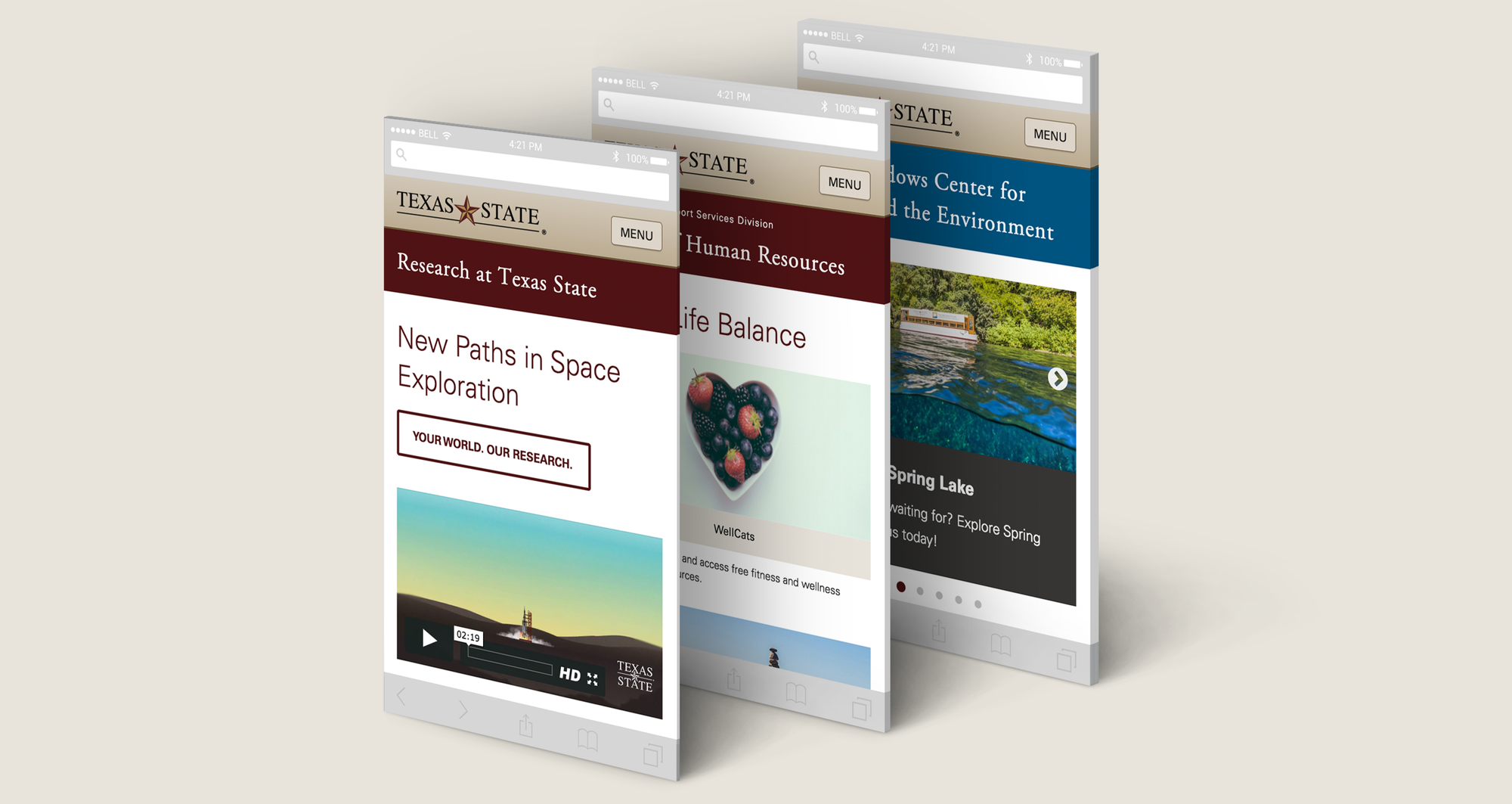
- The problem: Texas State’s web properties had stagnated for over a decade. The CMS relied on table-based layouts with limited mobile support, and campus units struggled to present information effectively. With admissions traffic already at 50% mobile, the gap between the university’s digital presence and user expectations was significant and growing.
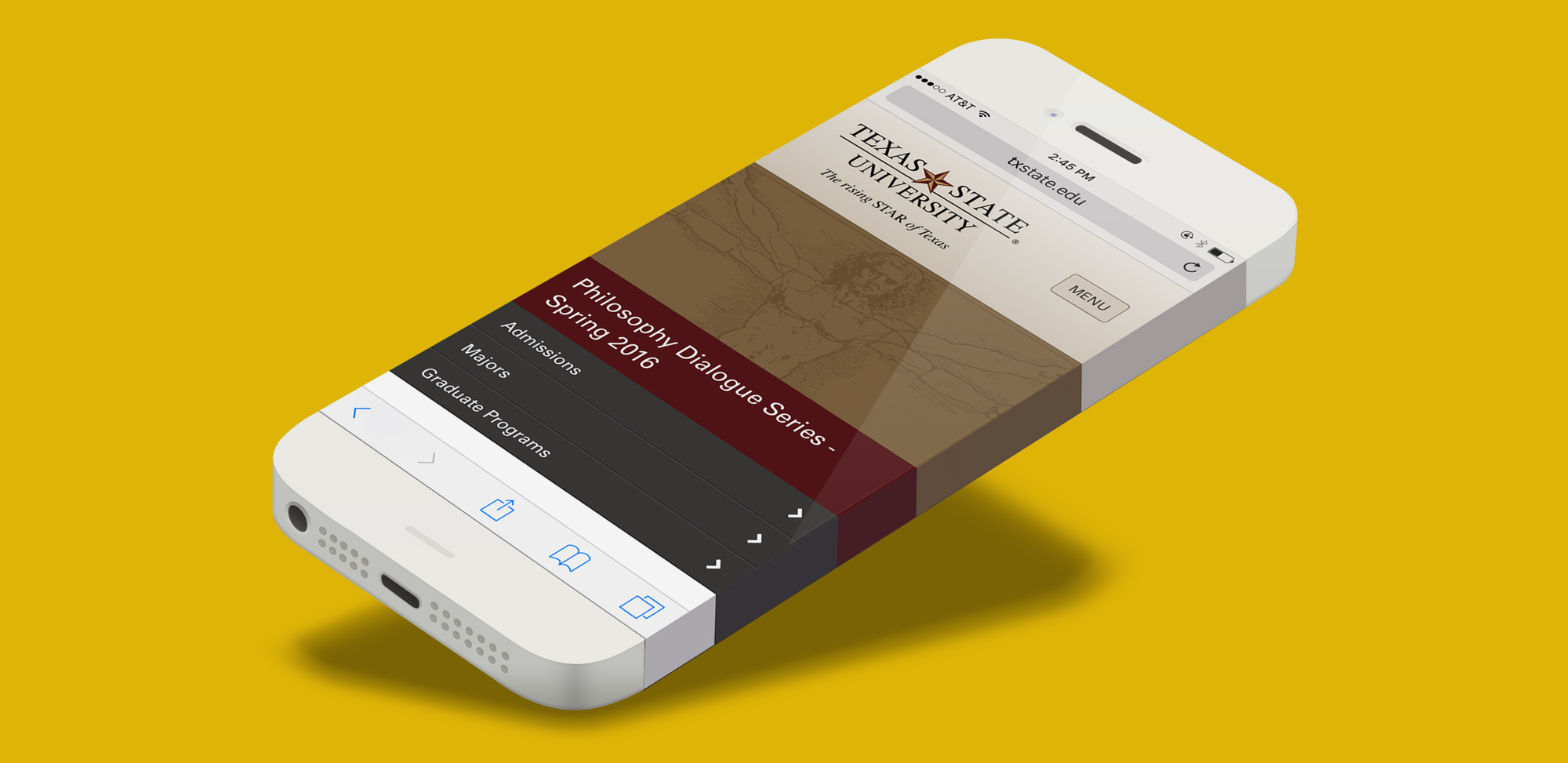
- Top outcome: Delivered a comprehensive digital overhaul, introducing the institution’s first responsive CMS templates, accessible digital identity, and admissions-driven homepage strategy, rolled out across 450+ university units through a structured six-month migration.
Context and scope
Texas State University is a large public research institution serving thousands of students. As the sole digital designer in the marketing department, my responsibilities ranged from homepage management to coaching content strategists on CMS best practices.
While the role initially had limited expectations, I identified a significant opportunity and pitched a modernization initiative to the incoming Director of Marketing. Securing cross-functional buy-in from marketing and engineering leadership, I led the project from discovery through full deployment.
Execution
- Discovery and alignment: Conducted focus groups to isolate publisher and end-user pain points, build a data-backed case for a comprehensive update, and align stakeholders across a politically complex institution.
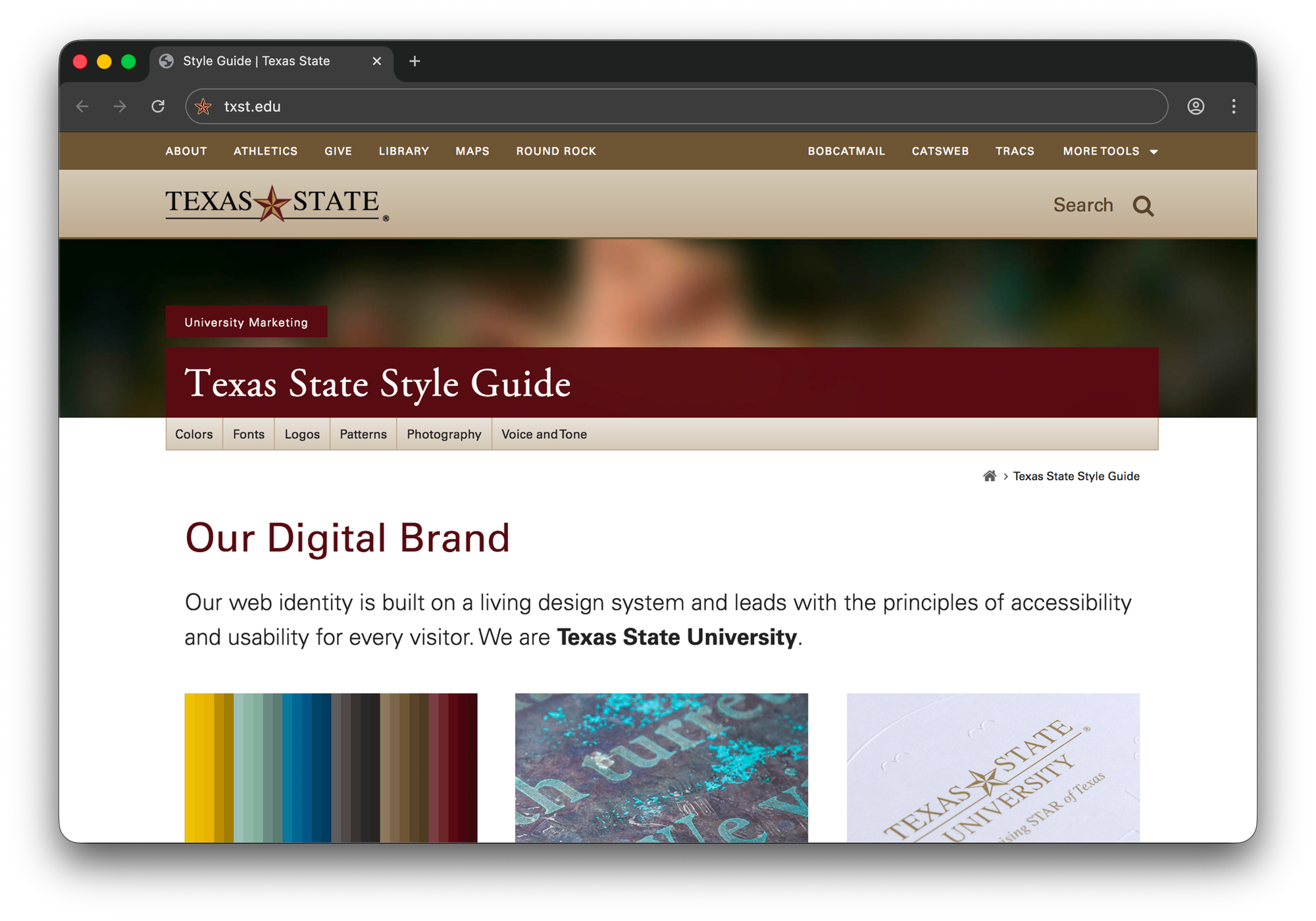
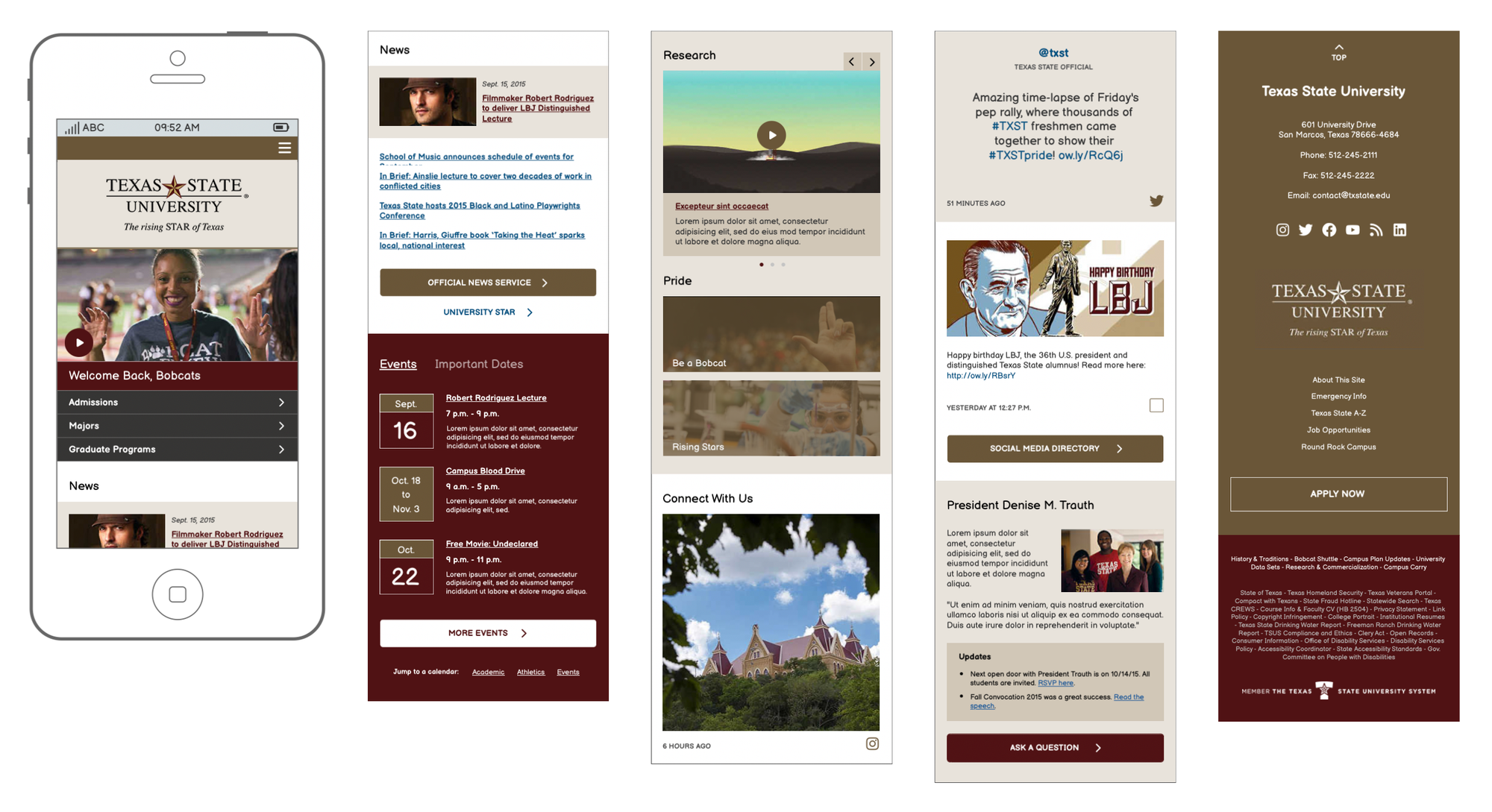
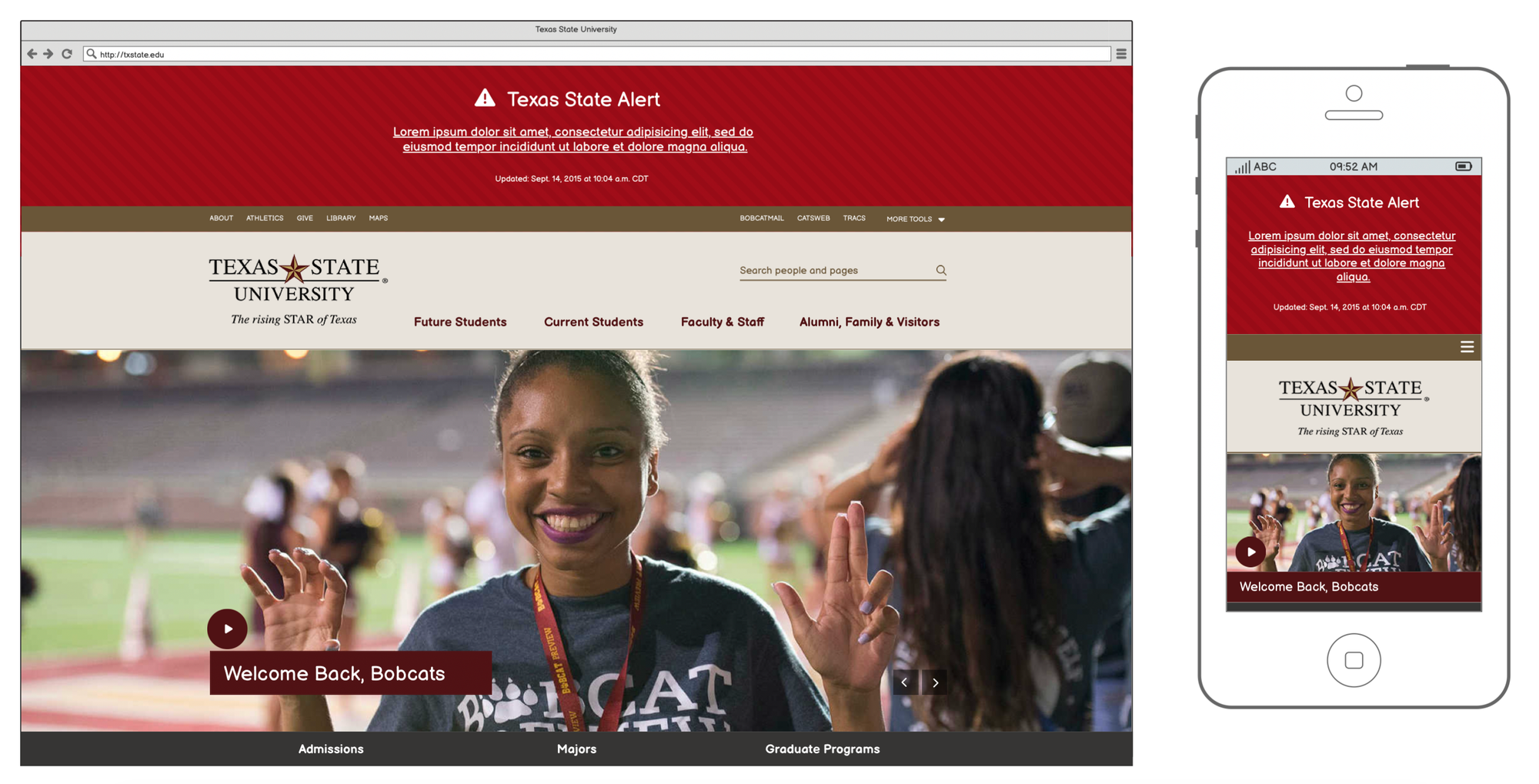
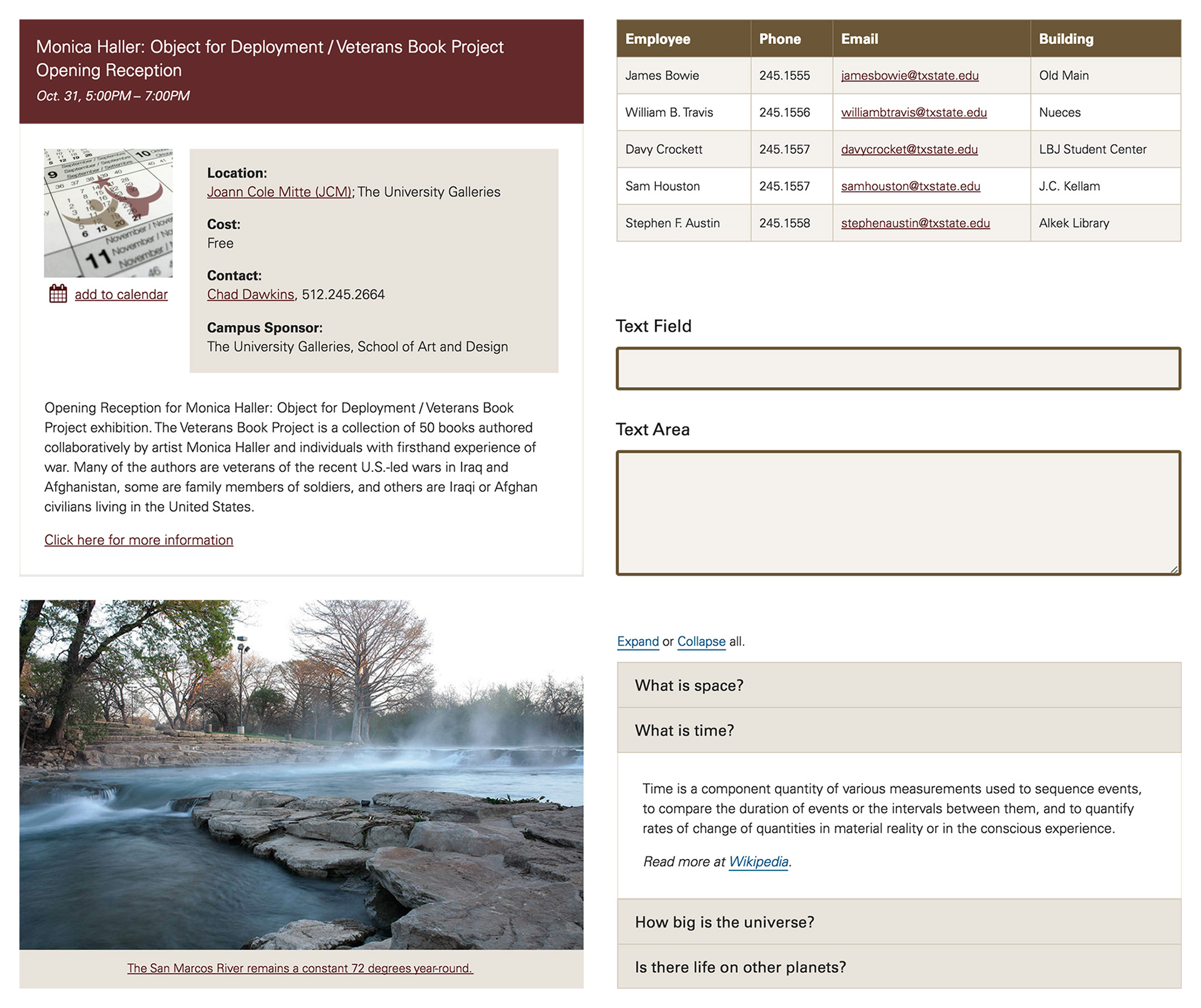
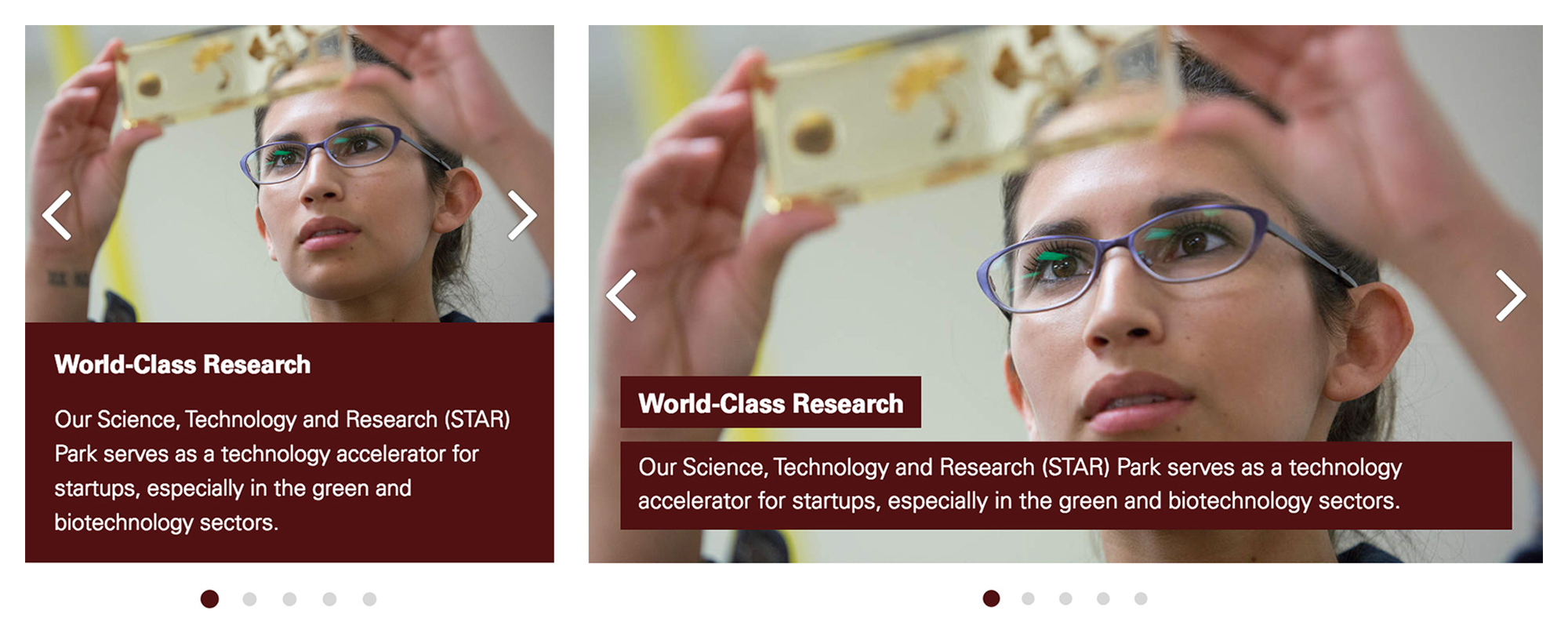
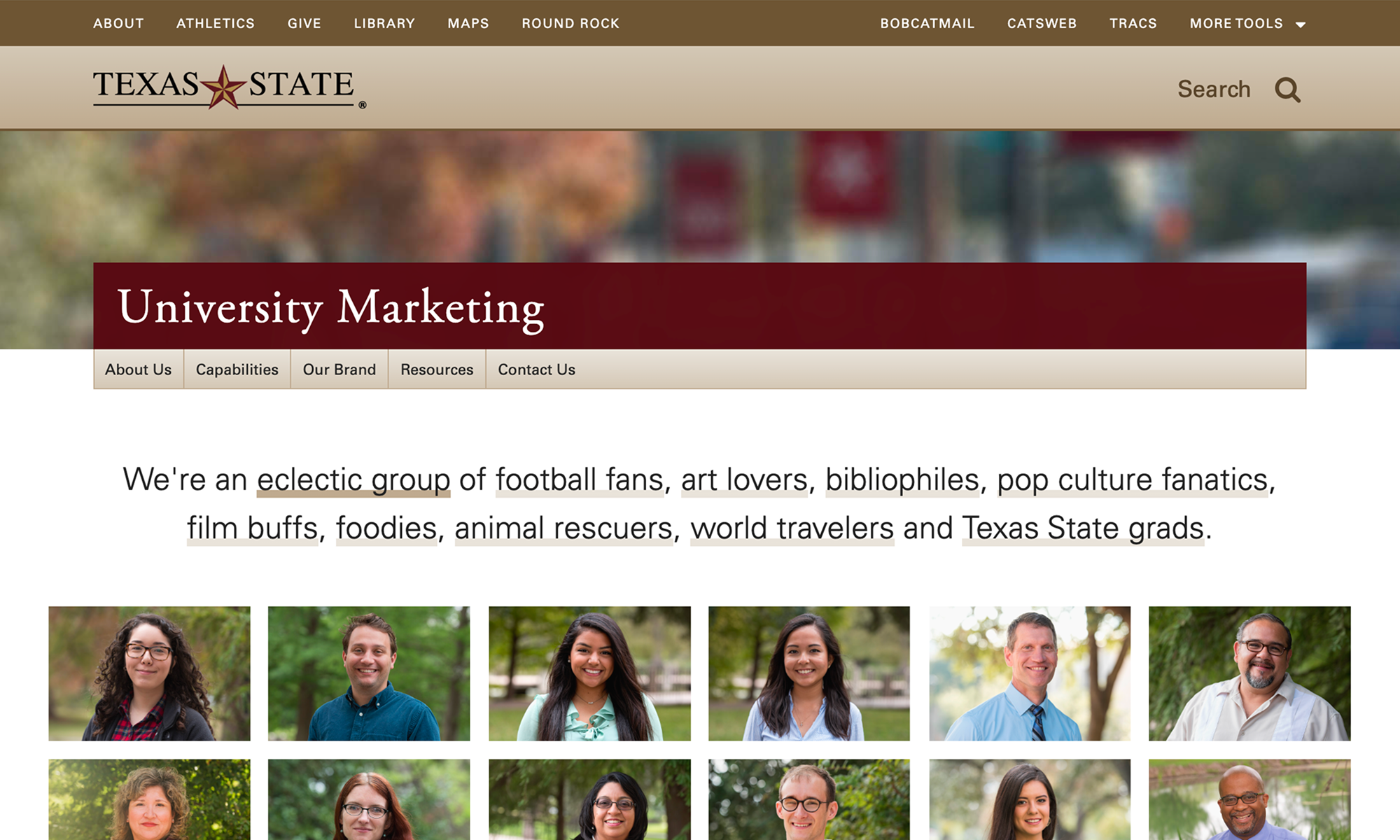
- Design and development: Designed responsive, multi-column CMS templates, a new admissions-focused homepage, and a documented digital identity system. Delivered full HTML/CSS prototypes for engineering handoff, with much of the production CSS utilized by developers.
- Adoption and validation: Confirmed post-launch success via multiple metrics. User surveys indicated positive sentiment, analytics showed increased mobile engagement, and accessibility audits demonstrated measurable compliance improvements.
- Organizational impact: Built trust with the web engineering team in an environment where marketing and technical staff rarely worked together. Those relationships grew into a formal partnership between the two groups that outlasted my time there.